


/file/publisher-c1a3f893382d2b2f8a9aa22a654d9c97/2021/08/f116e3b419d0251de0aa19414b56c2bb.jpg)

'D grade for Madani': Bersih ranks Dr M above 'reformist' Anwar
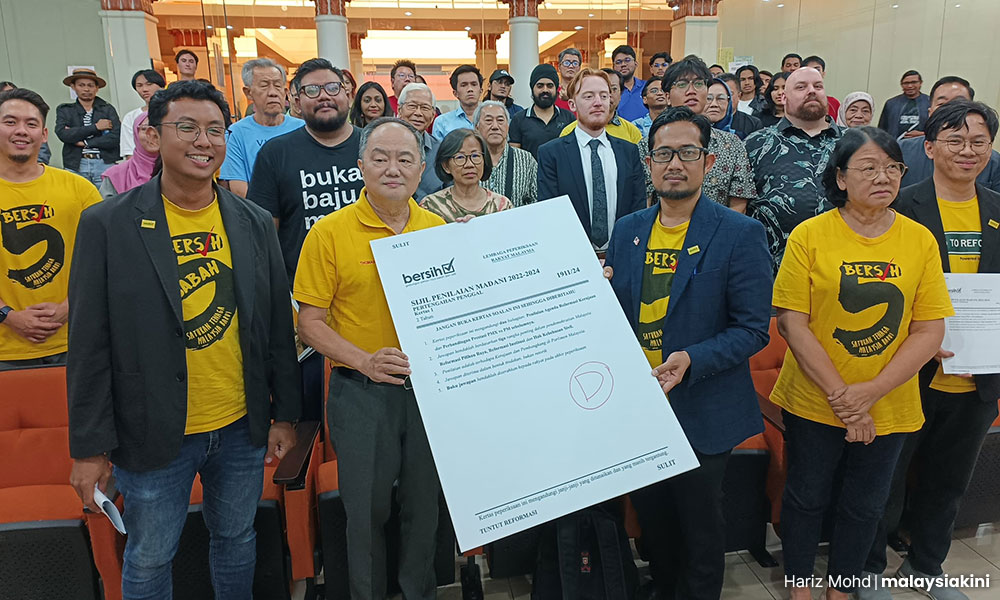
Bersih has given the Anwar Ibrahim-led federal administration a grade of “D” in its mid-term evaluation. The poor performance was attributed to the coalition government’s failure to carry out significant institutional reforms.
In a presentation of what Bersih dubbed the government’s report card last night, the electoral reform group also ranked Anwar behind its predecessors Ismail Sabri Yaakob and Dr Mahathir Mohamad in fulfilling their reform promises.
Bersih chairperson Faisal Aziz said their assessment of the government’s first two years found there were significant gaps
Bersih has given the Anwar Ibrahim-led federal administration a grade of “D” in its mid-term evaluation. The poor performance was attributed to the coalition government’s failure to carry out significant institutional reforms.
In a presentation of what Bersih dubbed the government’s report card last night, the electoral reform group also ranked Anwar behind its predecessors Ismail Sabri Yaakob and Dr Mahathir Mohamad in fulfilling their reform promises.
Bersih chairperson Faisal Aziz said their assessment of the government’s first two years found there were significant gaps between its reform promises and actual implementation.
The assessment, which combined two sections - the fulfilment of manifesto commitments and a comparison with previous administrations - returned with the Madani government scoring a total of 45.8 percent, he said.
“The government performed below expectations in both sections. In Electoral Reforms (section), there has been no meaningful progress on key issues such as constituency malapportionment, gerrymandering, or the introduction of absentee voting for outstation voters, despite campaign promises to address these.
“The government has failed to initiate policies to ensure fair representation, leaving crucial electoral reforms unaddressed. A Political Financing Act and amendments to the Electoral Offences Act remain incomplete, raising doubts about the government’s commitment to transparent and fair elections,” Faisal said.
While Putrajaya has achieved “incremental progress” in terms of institutional reforms, Bersih said major reform agendas have remained unfulfilled or stalled.
These include separating the roles of the attorney-general and public prosecutor, and giving parliamentary oversight in the appointment of heads to key institutions like the MACC and Election Commission.
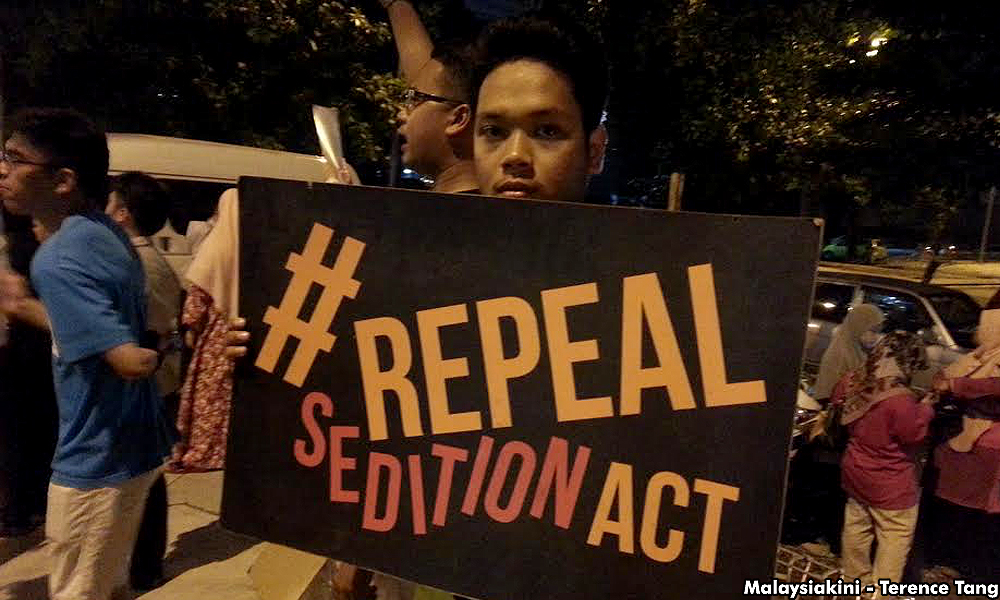
The Madani government was also found wanting in the area of civil liberties, where Bersih criticised its failure to repeal or amend repressive laws like the Sedition Act.
“Activists and opposition figures continue to face harassment under these laws, contradicting the government’s reformist rhetoric. Little progress has been made on establishing an independent media council or enhancing academic freedom.”
Najib achieved more
According to the group’s rating where it compared Anwar with the previous four prime ministers, Bersih had ranked Najib Abdul Razak at the bottom of the list while Ismail was given the top mark.
Anwar was placed in the middle between Mahathir (second place) and Muhyiddin at the second-lowest rung.
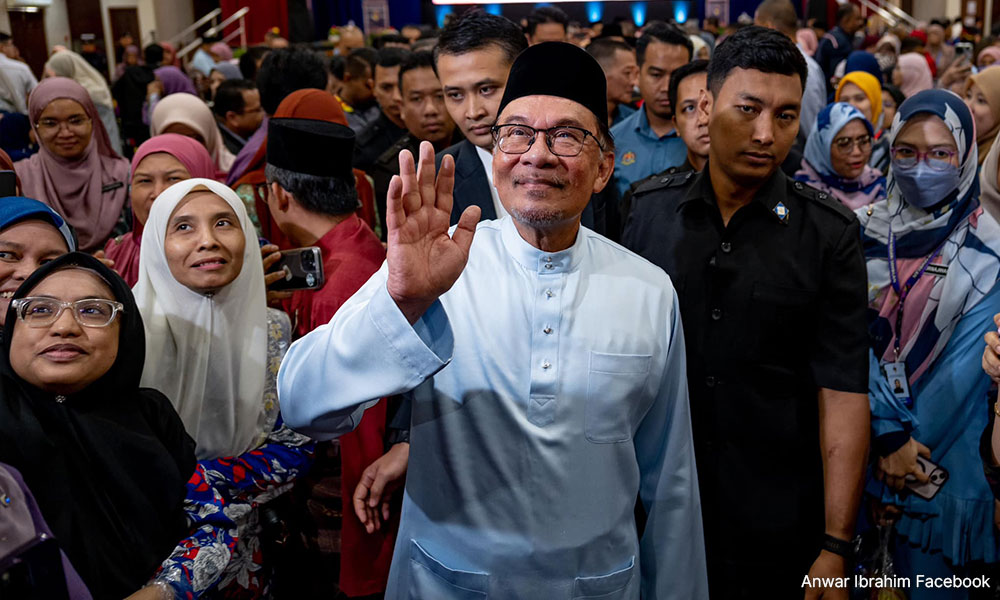
In its justification, Bersih said Ismail and Mahathir in his second tenure as prime minister had fulfilled more reform agendas compared to Anwar in his first two years in power.
The group said Ismail managed to achieve significant reforms within his short tenure of 15 months despite leading an unstable administration, including signing a memorandum of understanding with the opposition.
The MOU has led to bipartisan support for reforms, including the passing of the anti-hopping law, it added.
“Moreover, Ismail ensured the equitable distribution of constituency development funds to both government and opposition MPs, a major step in fostering bipartisan cooperation.
“In contrast, Anwar’s administration has yet to be able to secure comparable bipartisan reform agreements or implement groundbreaking measures in electoral and democratic reforms,” Bersih said.
On ranking Mahathir one step above Anwar, the group cited the democratic achievement during his tenure, including the establishment of the Institutional Reform Committee and Electoral Reform Committee, which it said had laid the groundwork for broader reforms.
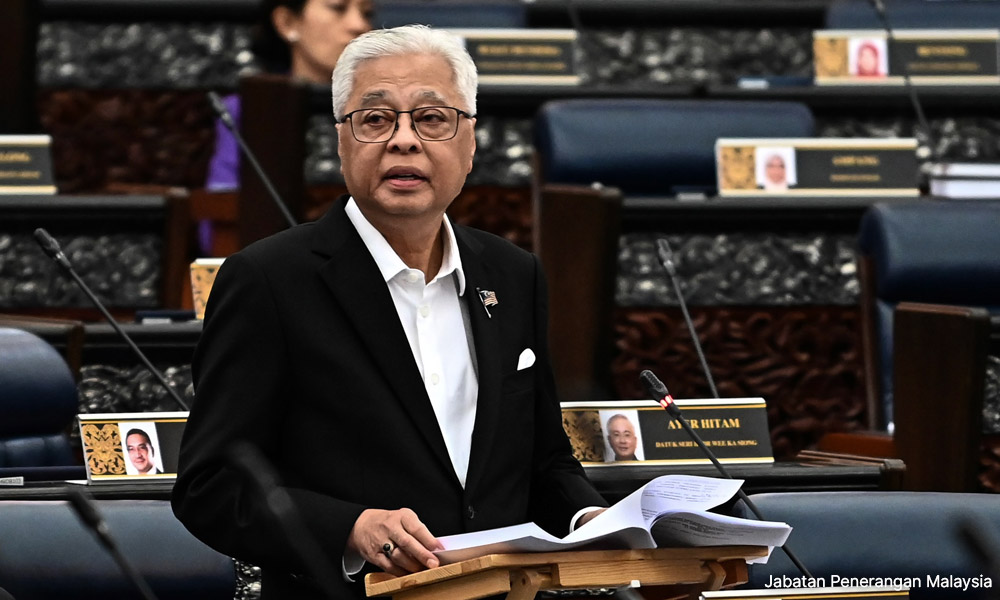
“By comparison, Anwar’s administration has not created similar institutional structures with such mandate, power and budget, raising questions about its strategic depth in reform planning.
“While the unity government has introduced measures such as enhanced Parliamentary Special Select Committees (PSSC), it lacks the comprehensive institutional frameworks that characterised Mahathir’s approach to pursuing reforms during those 22 months.”
Although Najib was ranked at the bottom of the list in structural reform, Bersih executive director Ooi Kok Hin noted that the jailed prime minister had actually performed better compared to Anwar by repealing the Internal Security Act (ISA), among others.
This was compared to “reformist” Anwar who has yet to repeal repressive laws such as the Sedition Act, and the Communications and Multimedia Act.
However, Ooi said, Najib’s performance plummeted mainly due to his subsequent actions that undermined the independence of public institutions.
Repressive laws still in use
In a forum after the unveiling of the report card last night, former Bersih chairperson Maria Chin expressed her concerns over the government’s continuing its utilisation of the Security Offences (Special Measures) Act 2012 (Sosma).
As a former Sosma detainee, the former Petaling Jaya MP said it was bothersome to see the repressive law being used in the recent actions against the Global Ikhwan Services and Business Holdings (GISBH) group.
“If we want to repeal Sosma from our laws, why are we still using the act?
“There are also quite a number of reforms being carried out, but even those the government had got it wrongly like what happened to the citizenship bill.
“They really botched it up. They gave equal rights to women to pass citizenship to their offspring, but they also added other provisions that are even more repressive,” she told the forum held in Kuala Lumpur.
Thomas Fann, another former Bersih chairperson, believed the Anwar-led administration was only using the coalition government as an excuse not to institute the reforms they had promised.
According to Fann, Anwar as the prime minister is in the position to effect changes but is reluctant to let go of the many powers that his office has.
“We have to continue to call out (the government). The power should be shared, the Parliament should be independent to serve its checks-and-balances function and the judiciary must be independent to defend the people.
“PMX is just enjoying it (his position) too much, I think,” he said.
/file/publisher-c1a3f893382d2b2f8a9aa22a654d9c97/2022/11/353584fc39fd4d5e5ee410515e858333.jpg)
/file/publisher-c1a3f893382d2b2f8a9aa22a654d9c97/2024/10/3b9149f8890a38db1f562e98e2e32bf9.jpg)
/file/publisher-c1a3f893382d2b2f8a9aa22a654d9c97/2022/06/a474372f81621b36e0ceaad79d51a695.jpg)
/file/publisher-c1a3f893382d2b2f8a9aa22a654d9c97/2024/10/3b5d533849ec82b5cd9a55ac29d4adf1.jpg)
/file/publisher-c1a3f893382d2b2f8a9aa22a654d9c97/2024/10/ed8ebb2c062f0d94e22c2c5a995e1af2.jpg)


Are you sure you want to delete this comment?
This action cannot be undone.